Fire-protection water storage is one of the few applications where the tank is the last line of defense, the math is non-negotiable, and the AHJ (authority having jurisdiction) gets the final word. NFPA 22 ("Standard for Water Tanks for Private Fire Protection") sets the rules. Here is how to read them.
The capacity calculation
NFPA 22 capacity is the simple product of two engineered numbers:
Required water capacity = Design flow rate (gpm) × Required duration (minutes)
Both numbers come out of the fire-protection design upstream of the tank. The flow rate is the maximum simultaneous demand from the fire-pump-fed systems on site (sprinklers, standpipes, hose stations, foam systems). The duration is set by NFPA 13 (sprinklers), NFPA 14 (standpipes), or the AHJ — typically 30, 60, 90, or 120 minutes depending on hazard classification and building height.
A few common examples:
- Light hazard sprinklers, single-story warehouse, 30-minute duration: 250 gpm × 30 min = 7,500 gallons *effective* capacity.
- Ordinary hazard II, two-story manufacturing, 60-minute duration: 500 gpm × 60 = 30,000 gallons.
- Extra hazard or storage, 90-minute duration: 1,000 gpm × 90 = 90,000 gallons.
- High-rise standpipe, 30-story residential, 120-minute duration: 750 gpm × 120 = 90,000 gallons.
Effective capacity is what's available *above* the drawdown level — see below. The actual tank you order is always larger than the effective capacity by the deadwater under the drawdown plus the freeboard above.
Effective vs. nominal capacity (the drawdown trap)
The most common sizing mistake is ordering a tank with a nominal capacity equal to the calculated demand. NFPA 22 effective capacity is the volume between the high-water level and the level at which the suction inlet starts to lose prime — typically a vortex breaker or anti-vortex plate above the tank floor.
A 30,000-gallon nominal-capacity tank with a 1,500-gallon dead volume below the suction has only 28,500 gallons of effective NFPA 22 storage. If your demand is 30,000 gallons, that tank doesn't meet code. The fix is either a larger tank or a properly designed suction inlet with a vortex plate, sized so the dead volume is below the calculated effective demand.
Always check effective capacity on the tank manufacturer's drawing before signing off.
Freeze protection — required almost everywhere
NFPA 22 requires that water in the tank be protected from freezing. Practical options:
- Heated tank — circulating loop with an indirect heat exchanger, sized to maintain 42°F minimum. Power loss is the obvious failure mode; many AHJs require generator backup.
- Insulated tank with internal heating coil — common on steel tanks in cold climates.
- Buried tank — in regions with deep frost, simply burying the tank below frost line is a passive solution. Common for FRP and steel.
- Tempered building — for indoor tanks, the building HVAC handles freeze protection.
Failure to protect against freezing voids fire-protection insurance coverage in most cold-climate jurisdictions. This is not a place to value-engineer.
Setbacks and clear space
Above-ground steel fire-protection tanks have minimum setbacks from buildings, property lines, and other tanks — driven by NFPA 22 and local fire code. Common rules of thumb:
- From buildings on the protected property: 1 to 1.5 times the tank diameter, but not less than the tank height divided by 2 — measured to the nearest exposing wall.
- From off-site property lines: typically not less than the tank height, often 1.5x or 2x in higher-hazard occupancies.
- Between adjacent tanks: at least one tank diameter for plain water service.
Always confirm with the AHJ — local rules vary, especially in wildland-urban interface zones.
Tank type by capacity (typical)
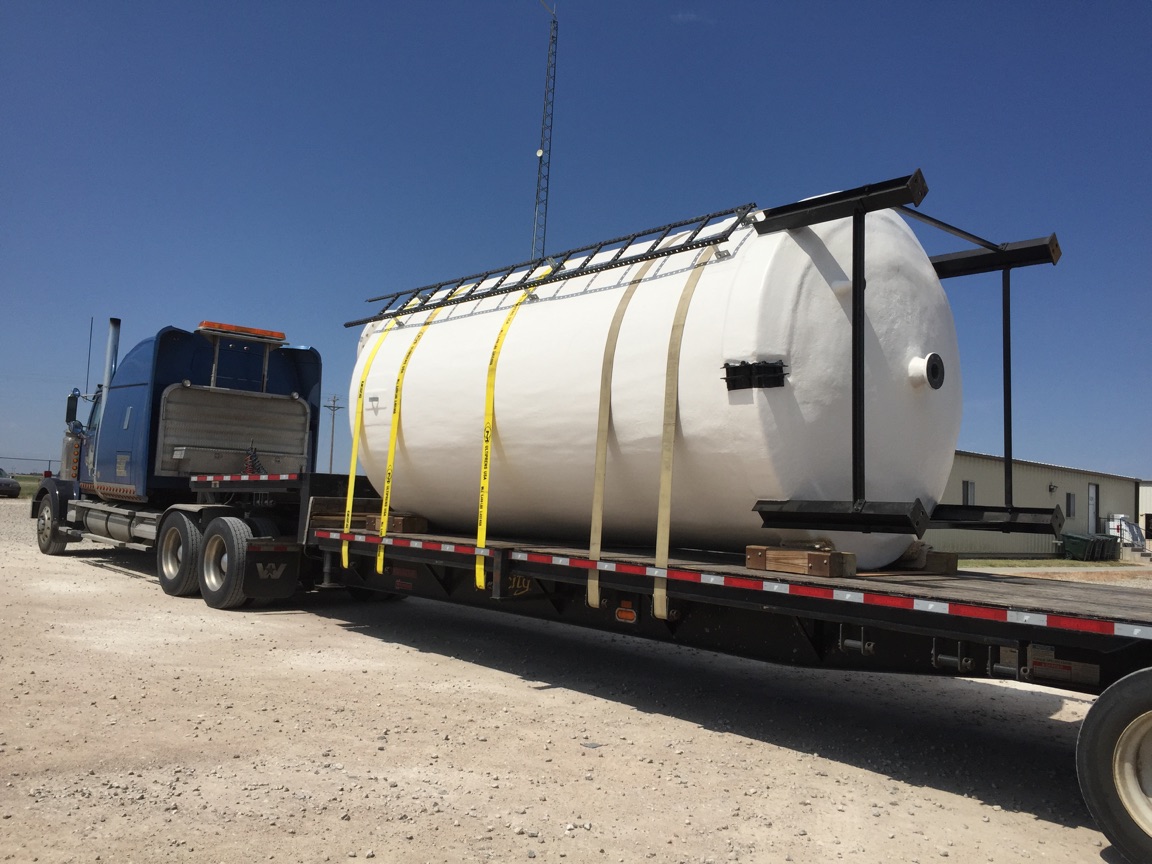
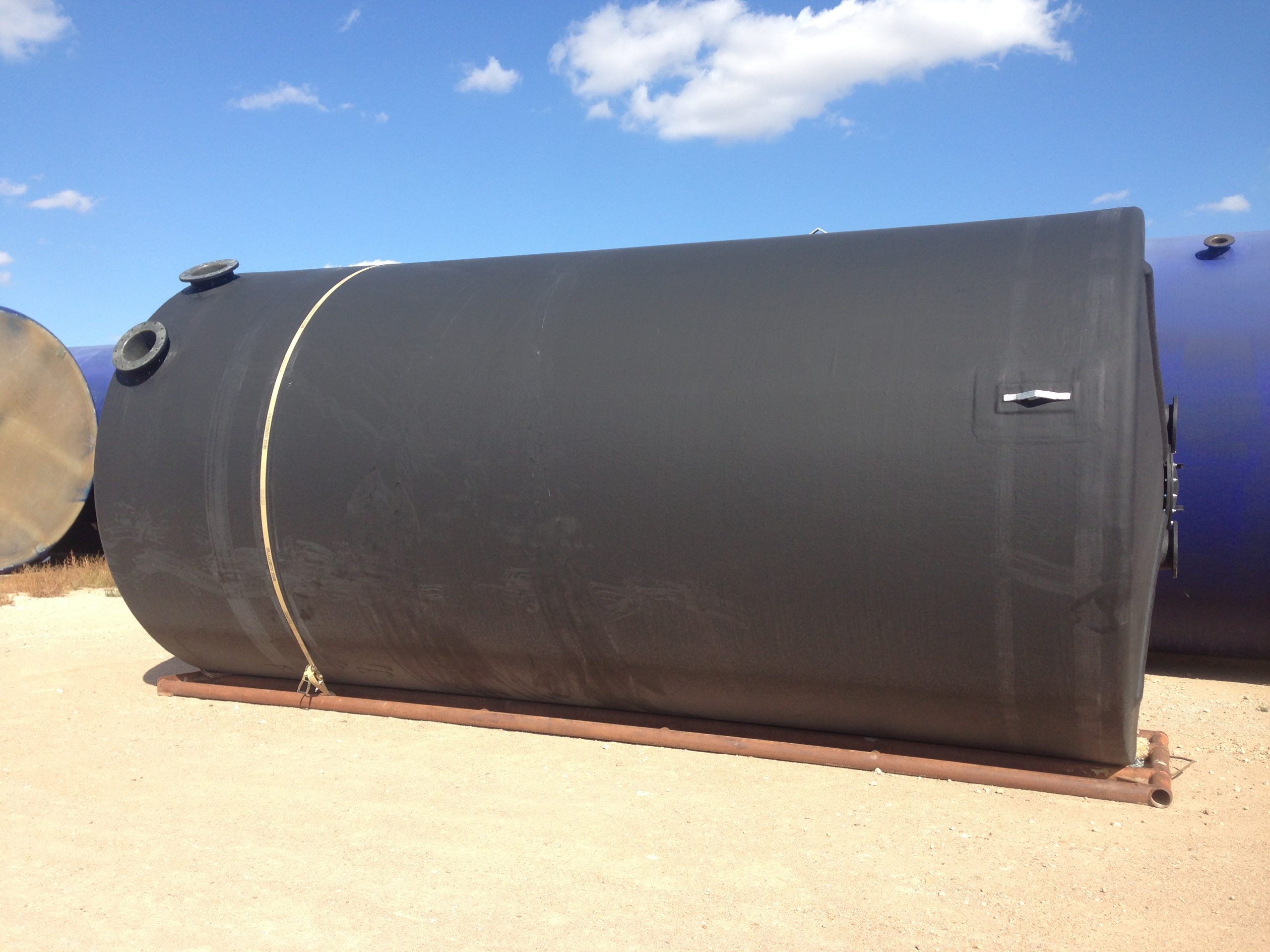
- Up to ~25,000 gal — polyethylene or fiberglass, ground-mounted. Cost-effective for small commercial and rural fire-protection.
- 25,000 – 250,000 gal — bolted steel tanks with NSF-listed liner. The workhorse of mid-scale fire-water storage. Field-erected, usually with cone roof.
- 250,000 – 1,000,000+ gal — welded steel or large bolted steel, often field-erected. Industrial sites, refineries, and large institutional campuses.
Polyethylene fire-water tanks are a niche but valid choice up to about 12,000 gallons total — common for rural systems where the local fire code and AHJ explicitly allow it.
Foundation and seismic
A 90,000-gallon water tank is 750,000 pounds when full. Foundation design follows ACI 350 (concrete tank foundations) or the manufacturer's recommended ringwall and slab spec, plus local seismic. In high-seismic regions (UBC zones 3–4, IBC SDC D and E), anchored ringwalls and additional shell stiffening are standard.
The tank manufacturer's drawing always shows the required anchor pattern, anchor bolt size, and projection. Foundation contractors must build to that drawing and not interpret it.
Inspection access — required by NFPA 25
NFPA 25 ("Inspection, Testing, and Maintenance of Water-Based Fire Protection Systems") requires a 5-year internal inspection on most fire-protection tanks. The tank must have:
- A code-compliant access manway (24" minimum for confined-space access).
- A safe ladder system or external stair, with cage above 20 feet.
- A working roof hatch for tanks with roofs.
- Engineered fall-protection tie-off points where applicable.
Every one of these is a line item on the tank drawing. Specify them up front; retrofitting fall protection on an installed tank is expensive and disruptive.
The accessories that come with every fire-water tank
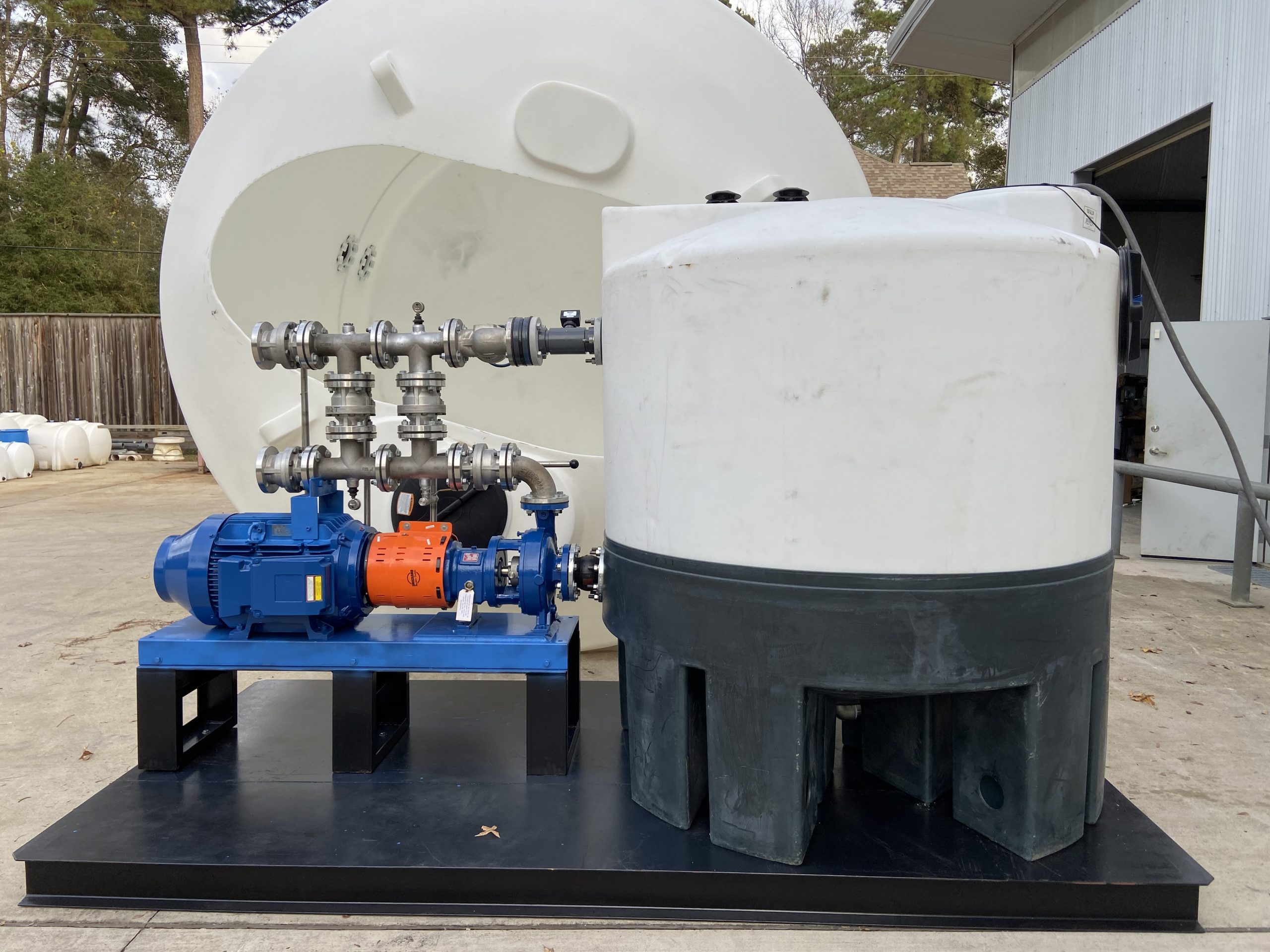
A fully-specified fire-water tank typically includes:
- Tank shell and roof (per material and code).
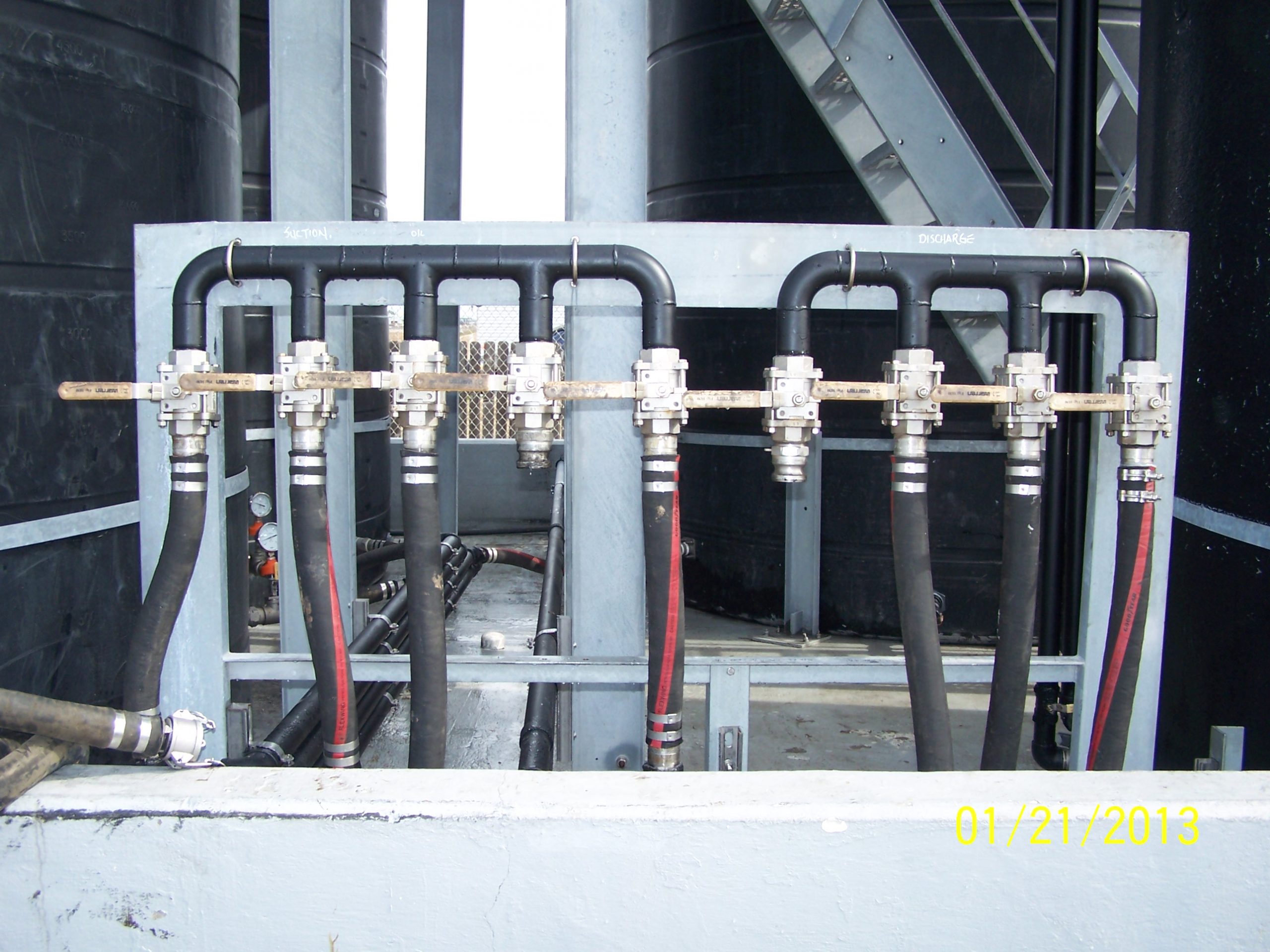
- Fire-pump suction outlet with anti-vortex plate.
- Fill connection sized for refill within the AHJ's required time (typically 8 hours).
- Overflow with screened, downturned discharge.
- Drain valve (low-point).
- Vent (atmospheric, screened).
- Level instrumentation — typically a pressure-transmitter-fed level with high/low alarms back to the fire alarm panel.
- Internal ladder, external ladder/stair, manway, roof hatch (as required).
- Heating system (climate-dependent).
Forgetting any of the above lengthens construction by weeks and triggers an AHJ punchlist on the way to occupancy. Tank Systems builds these out as a complete package on every quote.
Typical project timeline
- Engineering review (sizing, AHJ pre-approval): 2–4 weeks.
- Fabrication / shop assembly: polyethylene or factory-built steel, 6–10 weeks; bolted-steel field-erected, 10–14 weeks; welded-steel field-erected, 16–24 weeks.
- Foundation construction: 4–8 weeks, often in parallel with tank fabrication.
- Erection and accessories: 1–4 weeks for ground-mounted; 4–10 weeks for large field-erected.
- Final AHJ inspection and acceptance: 1–2 weeks.
Total: 12–30 weeks, depending on size and method.
Bottom line
NFPA 22 capacity is a math problem with a clean answer — flow times duration. The hard parts are everything around it: drawdown, freeze protection, setbacks, foundation, accessories, and AHJ coordination. Done right, a fire-water tank serves 40-plus years with routine inspection. Done wrong, it costs the project an occupancy hold and a six-figure rework. Get the calc right, then get the package right.
Have a project on the board?
Tell us the chemistry, capacity, and ship-to ZIP — we'll have a real quote back the same business day.